Santé! Viajar é descobrir histórias que vão além dos cartões-postais. Foi assim na Eslovênia, encantador país da Europa Central, que conheci na companhia da minha filha.
Durante boa parte do século 20 a Eslovênia integrou a antiga Iugoslávia, sob regime socialista. Em 1991, conquistou sua independência e hoje, como integrante da União Europeia, surpreende pela organização, belas paisagens e valorização de suas tradições.
Entre elas, o vinho! A jovem nação preserva uma história vitivinícola de mais de dois mil anos, herança que atravessou impérios, regimes políticos e fronteiras, mantendo variedades de uvas e identidade própria. São três as regiões produtoras: Primorska, Podravje e Posavje.
Hospedada na charmosa capital Ljubljana, viajei 50 minutos até o Vale do Vipava (Vipavska dolina), subregião de Primorska. Vipava situa-se entre os Alpes, o relevo cárstico de rochas e cavernas e a influência mediterrânea, ou seja, condições privilegiadas para a viticultura.
Conhecemos a Vina Poljšak, vinícola familiar fundada em 1830. Recebidas calorosamente por Katja Poljšak, da quinta geração, descobrimos uma produção artesanal em 6 hectares de vinhedos, onde tradição e inovação caminham juntas.
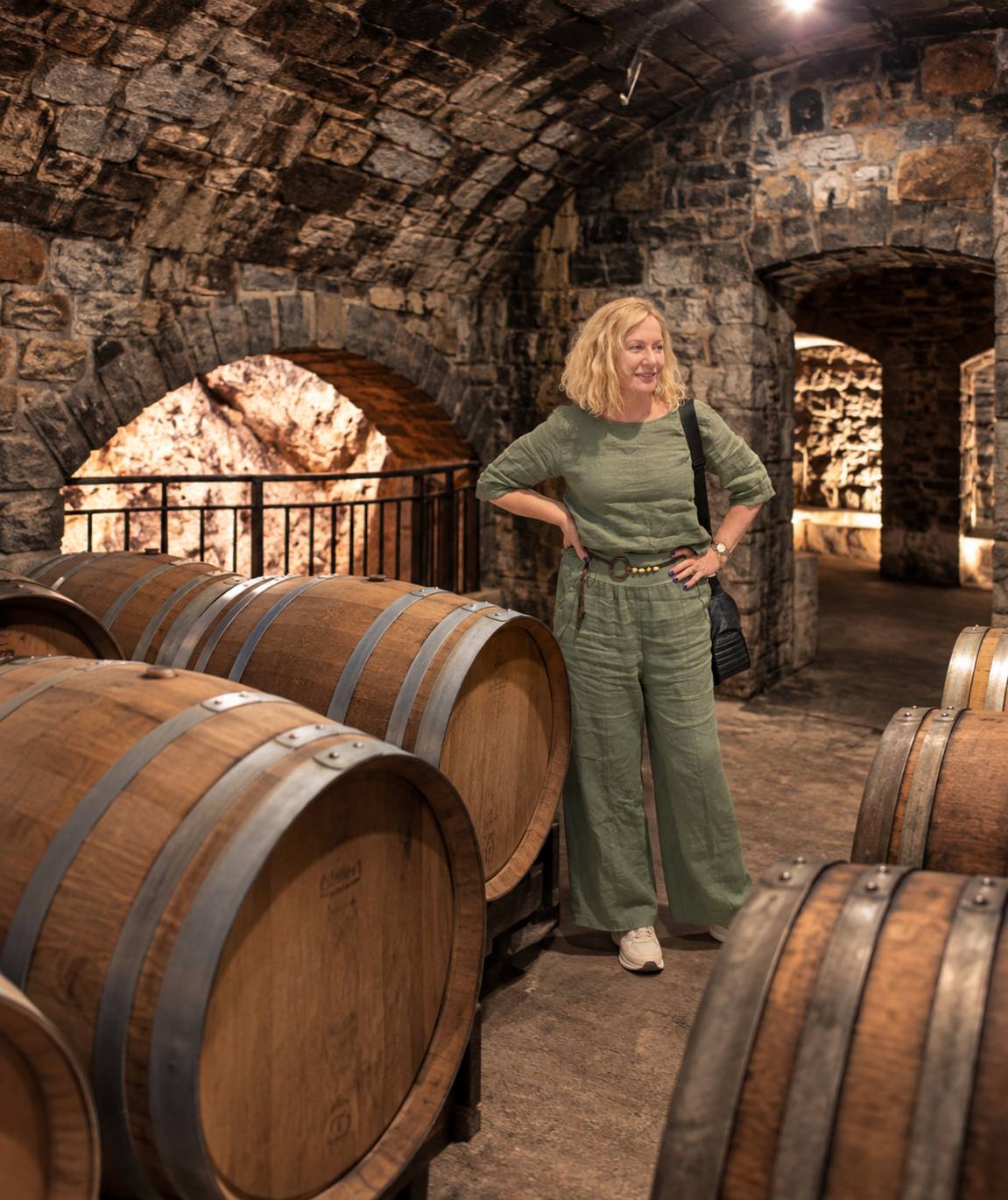
A surpresa foi a adega histórica instalada numa caverna natural, com um poço de água que ajuda a manter temperatura e umidade adequadas ao amadurecimento dos vinhos. Na degustação, destaque para o branco da uva autóctone Zelen: aromático, frutado, fresco, mineral, de corpo médio, final longo e picante.
Visitamos também a vinícola Žorž, cuja tradição remonta a 1696. Seus 12 hectares cultivam variedades internacionais e autóctones, como as brancas Zelen e Pinela. A bela propriedade oferece hospedagem aos amantes do vinho. Entre os vinhos provados, meu destaque inequívoco foi o vinho laranja de Pinot Gris. A maceração com as cascas, por mais de dez dias, resulta numa cor intensa, lembrando um clarete. Aromático, cheio de personalidade e surpreendentemente fácil de beber, foge ao perfil dos laranjas mais usuais. Um vinho saboroso e muito agradável. Quanto aos tintos? Confesso, não me impressionaram.
Além dos vinhos, a Eslovênia encanta por suas belezas naturais. Imperdíveis são a Caverna de Postojna, o Lago Bled e o surpreendente Castelo de Predjama, encravado na montanha. Um pequeno país de grandes encantos!
Até a próxima taça!
momentodivino@atribuna.com.br
@claudiaenoamigos
Slovenia – A Young Nation with a Millennia-Old Winemaking Tradition
Santé! Traveling means discovering stories that go far beyond picture-perfect postcards. That was certainly the case in Slovenia, a charming Central European country I explored with my daughter.
For much of the 20th century, Slovenia was part of the former Yugoslavia under a socialist regime. In 1991, it gained independence and today, as a member of the European Union, the country impresses visitors with its organization, beautiful landscapes, and deep appreciation for its traditions.
And wine is certainly one of them! Despite being a young independent nation, Slovenia boasts more than two thousand years of winemaking history. A heritage that has survived empires, political regimes, and shifting borders, preserving its native grape varieties and distinctive identity. The country has three main wine-producing regions: Primorska, Podravje, and Posavje.
While staying in the charming capital, Ljubljana, I traveled about 50 minutes to the Vipava Valley (Vipavska dolina), a subregion of Primorska. Vipava lies at the crossroads of the Alps, the karst landscape of rocks and caves, and Mediterranean influences, creating particularly favorable conditions for viticulture.
We visited Vina Poljšak, a family-owned winery established in 1830. Warmly welcomed by Katja Poljšak, a fifth-generation member of the family, we discovered an artisanal production spread across six hectares of vineyards, where tradition and innovation go hand in hand.
The real surprise was the historic wine cellar housed in a natural cave, complete with a water well that helps maintain the temperature and humidity needed for wine maturation. During the tasting, the highlight was a white wine made from the indigenous Zelen grape: aromatic, fruity, fresh, and mineral, with medium body, a long finish, and a distinctive spicy touch.
We also visited Žorž Winery, whose winemaking tradition dates back to 1696. Its 12 hectares of vineyards are planted with both international and indigenous varieties, including the white grapes Zelen and Pinela. The beautiful estate also offers accommodation for wine lovers.
Among the wines we tasted, my undisputed favorite was an orange wine made from Pinot Gris. Skin maceration lasting more than ten days gives it an intense color reminiscent of a light red wine, or clairet. Aromatic, full of personality, and surprisingly easy to drink, it stands apart from more conventional orange wines. A flavorful and thoroughly enjoyable wine.
And the reds? I must confess, they didn't particularly impress me.
Beyond its wines, Slovenia captivates visitors with its outstanding natural beauty. Must-see attractions include Postojna Cave, Lake Bled, and the remarkable Predjama Castle, dramatically built into a cliffside.
A small country with extraordinary charms!
Until our next glass!
momentodivino@atribuna.com.br
@claudiaenoamigos